

Guidance Articles
How to Sell Original Art Online | Small Business Ecommerce
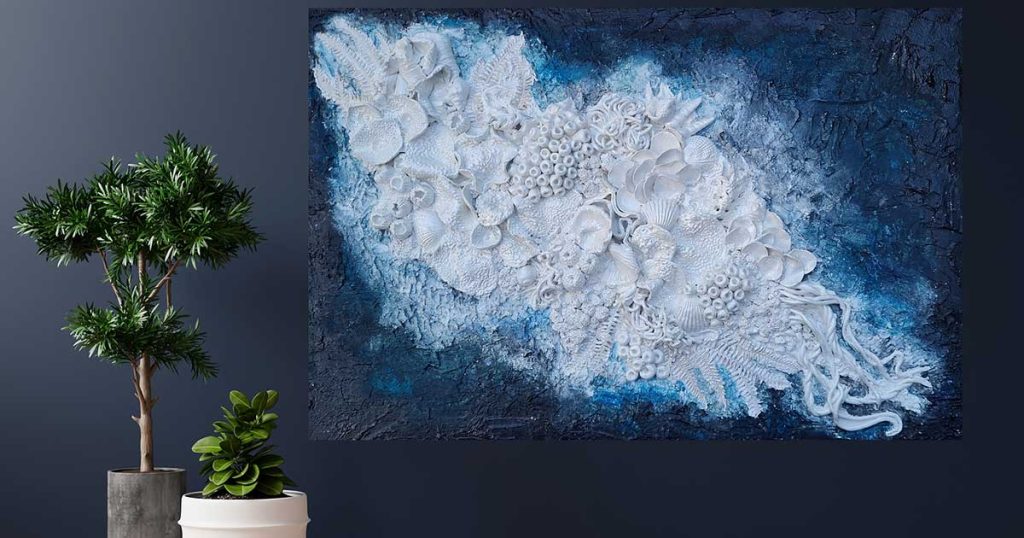
The €875 Question: How Do You Sell Original Art Online?
How do you sell a €875 original artwork online? It takes more than a beautiful photograph and a good product description. This SmallBizClarity case study looks at how pricing, product content, SEO, AI search, presentation and customer confidence all work together when you’re selling higher-value handmade products online.
By Seán – The Ecommerce Guy at Small Biz Clarity
How to Sell Original Art Online | Small Business Ecommerce
Selling a €20 product online and selling an €875 original artwork are two very different ecommerce problems.
At €20, a customer might see something they like, check the basic details, decide the price is reasonable and buy it.
At €875, the decision is different.
The customer isn’t simply asking:
“Do I like this?”
They’re also asking:
“Why does this cost €875?”
And:
“Is it really worth it?”
That difference changes almost everything about how the product should be presented online.
An original artwork needs more than a nice photograph
We recently worked on the product pages for a collection of original handmade artwork being sold through ShopStreet.
The collection includes original pastel paintings, floral artwork, botanical pieces and sculptural mixed-media work, with prices ranging from around €120 to well over €800.
The artwork itself isn’t the problem.
The challenge is communicating its value when the customer is sitting at home looking at a screen.
They can’t pick it up.
They can’t examine the texture.
They can’t see the frame from different angles.
They can’t meet the artist.
They can’t stand back from the artwork and see how it feels in a room.
The product page has to do some of that work.
At €875, you’re not selling “wall décor”
This was one of the most important changes we made.
If an original artwork costing €875 is described in the same way as a €35 decorative print, something has gone wrong.
Words matter.
“Floral wall décor” suggests a decorative object.
“Original soft pastel floral artwork” suggests a piece of art.
That doesn’t mean dressing the product up with pretentious language. Quite the opposite.
The customer needs clear, factual information:
- Is it an original?
- Who created it?
- What medium was used?
- What surface was it created on?
- What size is it?
- Is it framed?
- What sort of frame?
- Is the glass included?
- Is it ready to hang?
- Is it part of a collection?
- Where was it created?
- What makes it different from a print?
These are not simply SEO questions.
They’re buying questions.
The product description has to answer the questions the customer hasn’t asked yet
This is something we see repeatedly in ecommerce.
Businesses often write product descriptions from the seller’s point of view:
“This is a beautiful handmade painting featuring flowers in soft pastel colours.”
That’s not wrong.
But it doesn’t do enough.
A customer considering spending several hundred euro may want to know:
- Is this an original?
- What exactly am I buying?
- How big is it?
- How will it look on my wall?
- What is it made from?
- Is the frame included?
- Is this something that will still look good in ten years?
- Is it genuinely handmade?
- Why is this particular piece worth more than a print?
A good product page anticipates those questions.
SEO should support the buying decision – not get in its way
There’s a temptation to approach SEO by making a list of keywords:
original art, floral art, wall art, handmade art, pastel art, botanical art, Irish art, home décor…
Then try to squeeze all of them into the page.
That’s not how we’d approach it.
Instead, start with the way a real customer might search.
Someone looking for this sort of product might search for:
- original art Ireland
- original floral painting
- soft pastel artwork
- botanical wall art
- original artwork for living room
- Irish handmade art
- unique artwork for the home
Those aren’t just keywords.
They’re clues about intent.
Someone searching for “original floral painting” is telling us what they want.
Someone searching for “original art Ireland” is telling us something about location and provenance.
Someone searching for “artwork for living room” is thinking about where the artwork will go.
Good ecommerce SEO connects those intentions with useful information.
This is also where AI search changes the game
Search isn’t just about someone typing a phrase into Google anymore.
People increasingly ask AI systems questions such as:
“Where can I buy original Irish artwork?”
“Find me a floral painting for a contemporary living room.”
“What sort of original artwork would work in a neutral interior?”
“Where can I buy handmade art in Ireland?”
For an AI system to recommend a product, it needs to understand what that product actually is.
A page that simply says:
“Beautiful handmade wall art.”
doesn’t give it much to work with.
A page that explains:
“An original soft pastel floral artwork created on Pastelmat, professionally framed in a white wooden frame with double mount and glass, measuring 60cm × 54cm and created by an artist living and working in Ireland.”
gives it considerably more context.
Good AI-friendly content is usually good customer-friendly content.
That is an important distinction.
You don’t need to write for robots.
You need to write clearly enough that both people and machines can understand the product.
The short description matters more than many businesses realise
On an ecommerce site, the short description is often the first substantial piece of text a customer sees beside the product image and price.
It needs to do a lot of work quickly.
For an original artwork, we want to establish the important things almost immediately:
What is it?
Why is it different?
What is it made from?
How is it presented?
For example:
An original soft pastel floral artwork from the Dreamy Florals collection, capturing a lush bouquet of roses, hydrangea-like blooms and delicate botanicals in soft, atmospheric tones. Beautifully framed with a double mount, this one-of-a-kind artwork makes an elegant statement in any home.
That’s considerably more useful than:
Beautiful handmade floral wall art.
The second tells us almost nothing.
Price changes the tone
This is probably the biggest lesson from working through these products.
The €120 coral artwork doesn’t need the same treatment as the €875 floral painting.
At €120, the customer is still making a considered purchase, but the description can be relatively concise.
At €350, we need to communicate craftsmanship, materials, originality and presentation.
At €875, we’re effectively introducing the customer to an artwork.
The copy needs to slow down.
It needs to explain.
It needs to create confidence.
And it needs to make the price feel understandable rather than surprising.
That doesn’t mean trying to justify the price with waffle.
It means giving the customer enough information to make an informed decision.
Don’t forget the physical object
One of the easiest mistakes with artwork sold online is concentrating so much on the image that the physical presentation gets forgotten.
The frame matters.
The mount matters.
The glass matters.
The dimensions matter.
For a buyer, this isn’t just information for the specification table.
It helps answer:
“What will actually arrive at my door?”
“Custom-made white frame.”
“Double mount.”
“Glass protection.”
“Professionally framed.”
“Ready to hang.”
Those details make the purchase more tangible.
They also communicate craftsmanship.
Originality needs to be explicit
If something is genuinely original, say so.
Don’t make the customer work it out.
For higher-value artwork, we use phrases such as:
Original artwork – not a print
and:
One-of-a-kind artwork
That distinction is important.
There is nothing wrong with selling prints. Prints can be beautiful and affordable.
But an original painting is a different product.
The customer needs to understand that difference.
Don’t keyword-stuff the page
One of the things we deliberately removed from these pages was the long list of keywords that often appears at the bottom of ecommerce descriptions:
floral art | original artwork | soft pastel art | fine art florals | dreamy art | botanical art | wall décor | Irish art…
It looks like SEO.
It doesn’t read like good ecommerce copy.
Instead, those concepts should appear naturally in sentences throughout the page.
That gives search engines and AI systems context without making the customer feel as though they’re reading a database record.
Your category and product pages should work together
There’s another lesson here that applies to almost any ecommerce site.
Don’t expect one product page to rank for everything.
The ShopStreet Handmade Original Art collection page establishes the broader subject:
original handmade art in Ireland
The individual product pages then establish the specific subjects:
- original floral artwork
- soft pastel painting
- mixed media coral artwork
- coastal art
- botanical artwork
- Irish original art
That’s a much more natural structure.
The collection page establishes the category.
The product page establishes the individual piece.
And the internal links connect the two.
The real objective isn’t “better SEO”
This is where I think small businesses sometimes get distracted.
The objective isn’t:
“How do I get this product to rank for more keywords?”
The objective is:
“How do I make this product easier for the right person to discover, understand and ultimately buy?”
SEO is part of that.
AI search is part of that.
Good photography is part of that.
Product descriptions are part of that.
Trust is part of that.
Pricing is part of that.
And the overall buying experience is part of that.
They all have to work together.
A simple test for your own products
Take one of your products and imagine that you’ve never seen it before.
Now read the product page and ask:
- What is it?
- Who made it?
- What makes it different?
- Why does it cost what it costs?
- What is it made from?
- How big is it?
- How will it arrive?
- Where could I use it?
- Would I give it as a gift?
- Is it genuinely original or handmade?
- Why should I choose this rather than something cheaper?
If the product page answers those questions clearly, you’re probably on the right track.
If the customer has to hunt for the answers, you’ve created unnecessary friction.
The €875 lesson
Selling higher-value handmade products online isn’t simply about finding people with enough money to buy them.
It’s about giving the right customer enough confidence to make the decision.
The product page has to bridge the gap between:
“That’s lovely.”
and:
“That’s the piece I want.”
For a small business, that is where good ecommerce content earns its keep.
Not by shouting louder.
Not by stuffing keywords into a page.
But by helping the right customer understand exactly what they’re looking at, why it is special and why it deserves a place in their home.
And that applies to far more than original art.
The same principle works for handmade furniture, jewellery, ceramics, craft products, designer pieces, personalised gifts and almost anything else where the value isn’t immediately obvious from a photograph and a price.
That’s the €875 question.
How well does your product page answer it?
View Handmade Original ArtNeed a Little Clarity in the Chaos?
Get practical, actionable guidance to improve your online visibility, manage digital demands and make Google work for your business — not the other way around.
Get Guidance